Showing posts with label art. Show all posts

Friday, November 4, 2016

Friday diaries: Quality control

BlogLine


Hello there!

A big part of game development is refining stuff that you've already created, be it code, sound effects or graphics. Sometimes it's also taking stuff out permanently, bits and pieces which don't fit the narrative or overall story.

This week we'll take a peek into what's been left on the cutting room floor, and what features or assets have been altered during the process. Of course we'll be talking about the highlights, not every single thing that has changed during development. 


Background art


The home road scene from one of the first builds, circa February 2015.

Comparison shot from one of the background assets.


Especially the early scenes, which have been there from the start, have gone through many iterations. The graphical style has been re-hauled a couple of times, and that has required  some drastic changes. At first, we created the environments in this very fantasy-like fashion, with crazy lights and mostly prerendered stuff. 

During the spring of 2015 we moved to a more serious tone with the background art, and revised the areas to look more realistic. Trees looked like they could belong in the real world, and ground looked more realistic. Of course there's still this comic-book style flavor to the assets, but now they at least  represent actual real-life scenes, instead of this very abstract and game-like environment. 

The third version of the background art came when we decided to set the game permanently at night, or at the hours of dusk. All the lights would be pre-set in the locations, and the sun would never come up. An eerie fog rolls over the scenes, and there is an ominous glow to some areas. Most of the areas look very different, than they looked during daylight. 


Art style 


Original design of the big house on the left, and current version on the right.
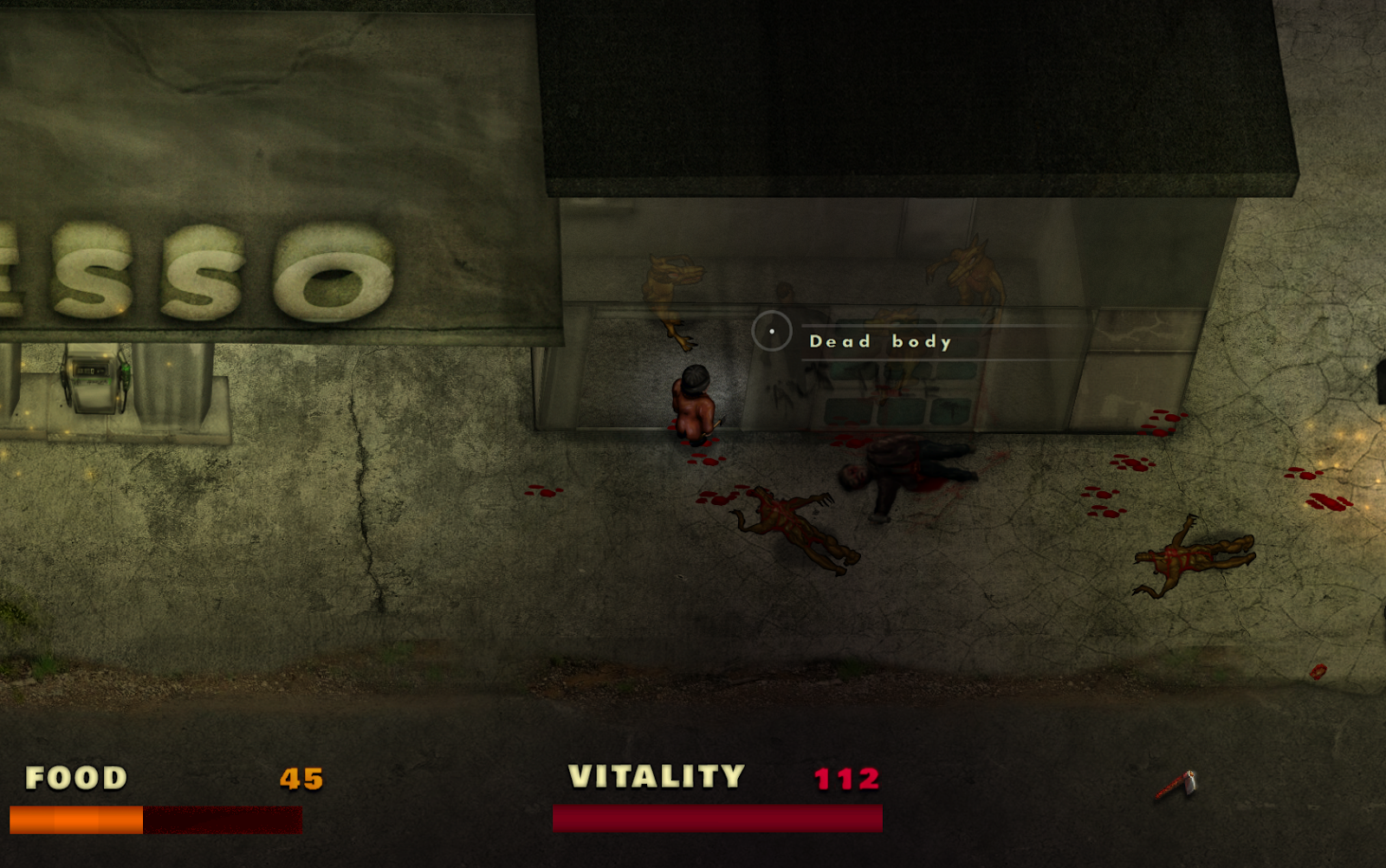
Screenshot from the current version of the game; the abandoned gas station.


This is partially related to the earlier point, but this one is about the big picture. In the very first draft our game was designed to feature a fully top-down view. Then, we tried to create a sidescrolling concept, but that lacked all the fun and engaging gameplay that we wanted to achieve. After that we settled on this slightly slanted bird's eye vision. It was supposed to function like a top-down game in the code, and reveal a bit more about characters and environment, but it soon transformed into this isometric type of deal. Now we have to deal with things being behind other things, walls to become transparent once you're inside the building, and avoid player overlapping things.

When we finally got past the initial birth pain, I took some time to sketch stuff out, and think about how I wanted the whole game to look and feel. In the spring of 2015 I had recently watched the Nirvana documentary Cobain: Montage of Heck, which featured these beautiful hand-animated sequences. Those became one of my main inspirations in creating the look for this little mid-nineties Finnish town. 

Another key inspiration at that time was the wonderful artwork done by Simon StÃ¥lenhag. He has created some really unique vistas, which perfectly capture the bleak and beautiful nordic atmosphere. 


Enemy design


The old enemy design in motion. This build is from the summer of 2015.

The evolution of the Bruiser design.


One character asset, which has gone through most iterations, is the 'Bruiser' monster, also known as 'The werewolf monster'. The very first version was this demon-like hairy blob of flesh, which was inspired by Warhammer chaos miniatures. Then, we took the design to a more standard humanoid / werewolf form, which is more streamlined and clear visually. 


The writing 


One of the more grislier bits of Kalaban, seen in the current version of the game.


Oh yes, even the core of our storytelling has changed quite a bit. Kalaban was originally set during the winter, in some generic American little town. The town was overrun by demons and monsters, but we then decided to make the story and setting more personal. The date was set to be in 1995 in early development, and frankly it could've been set in -94 or -96 as well during that time. Somehow just setting it in the smack center resonated with us, especially with the cultural transition happening during that time. For example, the album Mellon Collie and the Infinite Sadness by The Smashing Pumpkins, and films like Se7en coming out that year.

All the dialogue and interactions in the game are written by either Tuukka or me. We've discussed about the tone and the themes endlessly. If something needed to go, it was axed. If something had to be added, we worked it into the game. Earlier this year we did a huge re-haul to the story, and decided to add the NPCs into the game, with their own little side quests. Now, it would be impossible to think about the game without those characters. They are an integral part of the experience. 


User interface


Original UI from early 2015, where inventory bar was always visible and in real-time.
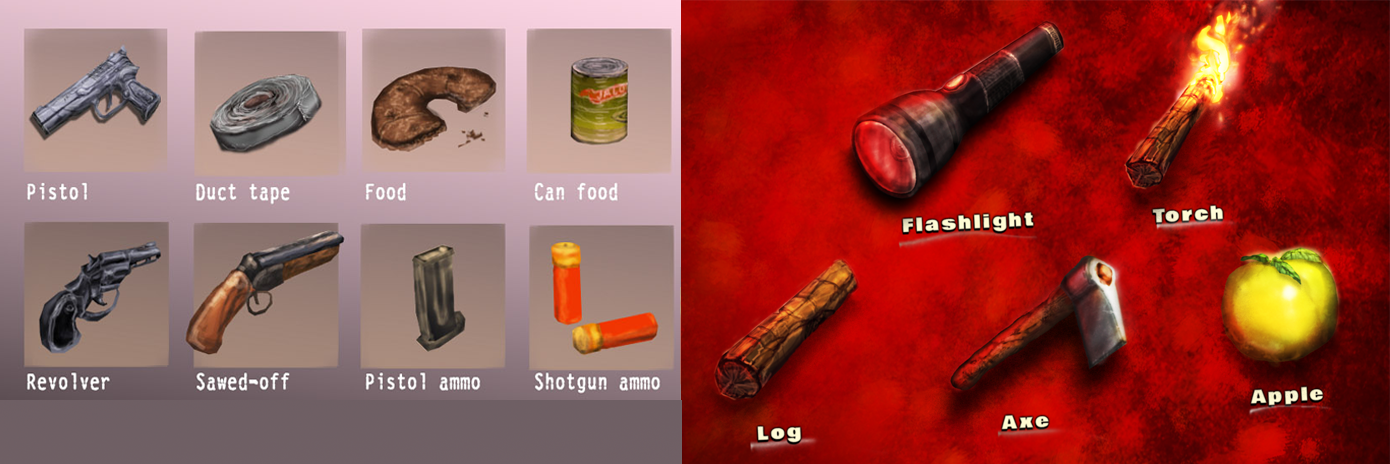
Comparison between the old icons, and the new.


The UI in Kalaban has been through a lot of changes. Originally, we started the game as a purely horror-themed adventure game, and then moved more towards action adventure genre. We needed to add the inventory screen to the game, so that players could manage their hotbar and the items they're carrying, all without interruptions. 

This gave the game more action RPG type of flavor. The changes and reworks took a long time to refine. We started planning the new inventory in October 2015, and at first it was going to be a drop-down menu like in the early Fallout games. We then opted for a more standard grid-based view, but that meant scrapping the previous system entirely. 

Not only have we redesigned the interface over and over, but we've also thrown away the old icons. They were created in the early stages of our development, and they no longer represented the overall visual fidelity of the project. The current ones are better in line with the present art style.


Initial sketch art of the drop-down style inventory, with old icons as placeholders. 

Current version of the inventory screen, with ammunition counters and the classic paper doll. 


But it was the right call, and that choice gave the inventory a lot more clarity, without having to scroll through the whole list, and sub-tabs. Ease-of-use and speed are everything when you're creating the UI, and that's what we went for. 

Now you can drag & drop items to your hotbar, like the health items and weapons, and equip them in real-time. The inventory screen pauses the whole game, so you don't have to worry about enemy attacks, as you read through the flavor text. 


 Sound design


We can't present you the current sound fx, so we present some moving pictures.


The original sound design in Kalaban was godawful. It was just a bunch of freeware and stock effects cobbled together by me. They were only meant to give you a general idea of what you might hear in the game. For the longest time, we did not have a real sounds for any of the inventory items, or effects for the UI. Those details were only recently been added to the game. 

The enemy sounds in the game were particularly awful in early development. The werewolf monster taunts were recorded by me, and I made them as total placeholders, so that they could be replaced at any time. Now, finally after a long wait, our audio mastermind Eetu re-designed the mutant sound effects. And my god, they're a thousand times better than the old ones!


Combat with the Blow-up mutant. 


In other news


Our game was finally launched on Steam Greenlight on Halloween. Some people have missed the point of our very retro intro cinematic, which is not that surprising. I do understand, that for those people who have not grown up with PC games of the nineties, that cinematic can be really confusing. Some people thought that it was just laziness to create such visuals, or that perhaps we don't care enough to put more effort. 

But in fact, the cinematic looks pretty much exactly like we wanted it to look. We wanted to faithfully re-create the cgi videos from the mid-nineties, and all the details in that animation was done with this in mind. The game in itself is done with a quite serious tone. We wanted to have a bit of fun with the trailer, and show our love for the old cinematics, and their wonderfully cheesy nature.

I think people have different kind of ideas about nostalgia. A show like the Stranger Things is set in the 80s, and takes story cues from the old Stephen King stories and Spielberg movies. But at the same time it has very modern visuals, with CGI effects, and all the frames looking polished and perfectly lit. That's what viewers today expect, not the authentic retro quality, which would actually represent the era truthfully. And that is totally fine. We've been taught to expect the certain kind of visuals, no matter what the subject.


Anyways, our game is on Greenlight right now, so go give it a thumbs up, and help us fulfill our dreams: Kalaban at Steam Greenlight.


Saturday, October 22, 2016

Character design in Kalaban

BlogLine

Hello there, fellow readers!

I've talked about monster design before, but I've never gone into the detail of creating a NPC. These are the non-playable characters that roam the game world, and who you interact with.


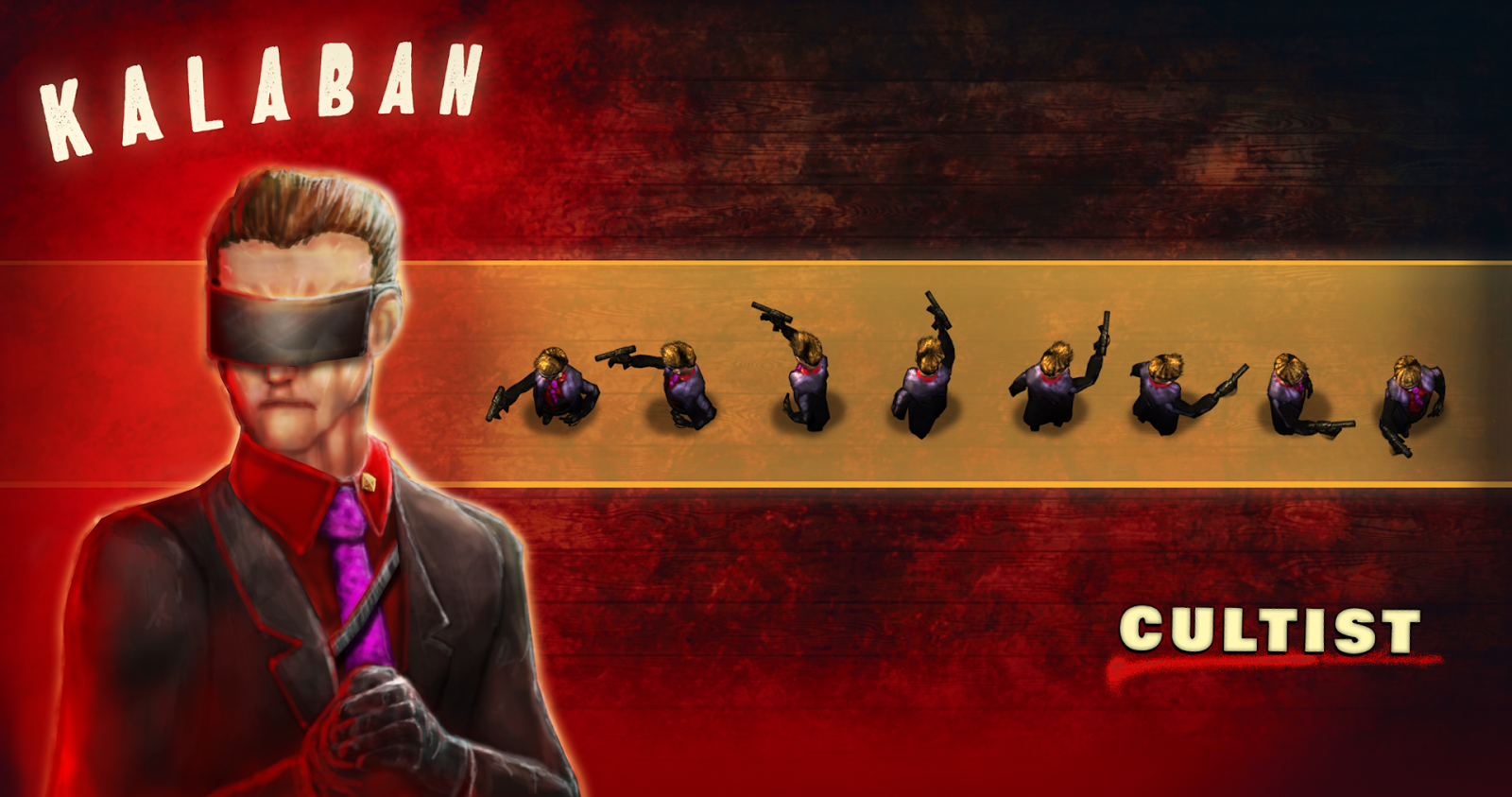
Colored illustrations of Pena and Cultist henchmen.


The process begins with either me or Tuukka writing a simple description of the character. Who they are, what's their purpose and what they do in the story. Then, our character designer Vesa-Pekka takes the description and draws a sketch art based on the description. If the sketch art is fitting, and matches the soul of the character, we move on to the illustration.

All the colored illustrations in the game are done by me. I take the drawing to Photoshop, and create a new picture based on its design. I don't do a direct line drawings, but I do want the art to closely represent the sketch art.


Sketch art by Vesa-Pekka on the left, and my illustration on the right.


 Actual textures used on the prerendered model.


After the 2D illustration is finished, I take the picture and create the in-game model based on its look. I use the excellent MakeHuman software in the creation of human characters, as modeling them all by hand would take way too much time and effort. After all, our core team consists of four developers, and all the other guys in the team have other day jobs aside from the game development. I'm the only one working on the game full-time, so that brings an extra challenge to the mix.


Prerendered sprites of the model, with correct lighting and shadows.

Close-up of the prerendered model.


All the textures on the models are original paintings, so that they follow the hand-drawn art style. When viewed separately, they are quite simplistic. I've figured, that you don't need a huge amount of detail, when the finished model is going to be a 128 pixel wide sprite on the screen.

When the 3D model has been finished and animated, I render the animations to separate images. Then I take the images to Photoshop, add shadows, shading and color correction to them. After that I export the sequence to the game-ready sprites. Those sprites then become active objects inside the game, which you can interact with. 


Paula's sprite in real-time.

Kaarina encounter and dialogue in-game.


The length of the process varies a lot. The illustrations and textures take about a day to finish, and sometimes I can get a whole character done during one workday. With all the animations, tweaks, etc. it might take two days. If there are some necessary corrections, the process might take up to 2-4 days total. And that's just the visual side. 

Then adding the gameplay element takes a lot more time. That really varies, and is usually a process of weeks or months, and is done in tandem with other development. The writing process behind the NPCs also varies a lot. Some characters were written in a day, others were a result of several months of planning. When you finally see it in the game and interacting with other elements, you can get into the fine tweaking. 


Cultist henchmen sprites. One of the few hand-crafted human models in the game.

NPC encounter at the purification plant.


The more you have elements interacting with each others, the more complex it gets. When you only have a couple of enemies running around with one NPC, things are fairly simple. But when you have a wide cast of characters with their own quests, side objectives and behaviors, it's much harder to keep track of. 

But that's the whole beauty of developing an open-ended game. The fact that you get to change the character's fate is an exciting feature. And once you've tasted that player-driven narrative, you can't go back to simple arcade games. 

Friday, August 5, 2016

Friday diaries #9: The World of Kalaban

BlogLine

Howdy! This week we're gonna take a special look inside the world and its creation. Back in the early days of our development I wrote an article touching on the subject of crafting new scenes. Now, more than one year later, I figured it would be worth looking into again.

Every scene begins with a very, very rough sketch. These are either scribbled on paper or made in MS Paint. As they would be too ugly to behold, we won't be posting any early scene sketches here. The next step is to make a rough 3D render of the scene. For example, here are 'Bob's cabin' and 'Junkyard' scenes in their very early stages:


The first renderings of the structures don't often have textures. They're just colored objects to help us block out the placing in the scene. When the shapes start to fit into place, we start to add more details to them. Some of the buildings are completely built in Photoshop, and the 3D renders only serve as the basic form of the structure.


Next comes the texturing and placing of the props in level. These placements are temporary, and don't transfer into the finished scenes. At this stage we also try to figure out where to put the light sources, and how will the light vs. shadow play out in the scene. Last autumn we made the decision to make all the lights prerendered, which has allowed us to strive for a more atmospheric experience.


Usually the fully prerendered 3D look doesn't fit that well into Kalaban. The characters and elements on the screen are more comic book style, than photoreal, so we usually try to make environment fit those assets. After hours and hours of sweat and tears the backgrounds are finally ready to be imported into the game. Below you can see the beach scene in its full size.


When the scene is done graphically, it's time to make it run realtime in the engine. This requires a number of different operations. The backgrounds need to be chopped into smaller tiles, and the interactive items need to be included separately. Here's what the scene looks in the editor, with all the items in place, and on their right layers:


The final steps include scripting the behavior of each object, and Bob's reactions to them. It's much less about the visual side, and more about figuring out things in the code. Some items may pop up on wrong layers, some items may not appear right, and so on. There's also atmospheric sound effects, hitboxes, monster and item placement. The final form of the scene is defined only after hours of testing it, and figuring out if things work according to the whole story of the game.

And that's what goes into creating a new scene in Kalaban. The process takes anything from under a month to a couple of months, and after that we still do little tweaks here and there. Once the scene functions properly, we view things through the bigger picture, and fix the things that need fixing.

Saturday, July 2, 2016

Enemy profile: The Blow-up

BlogLine

Howdy! At the moment we're working on multiple new enemies for the game. One of them is the Blow-up, an insect monster, which explodes when it gets close to the player.

Sketch art by our multi-talented musician / sound guy Eetu Suoranta.


We've had a certain enemy roster in mind from the very start, but we've wanted to take things slow with it and not add all of them at once. This way we've had the time to balance the game, and program the weapons before having a dozen different enemies charging towards you. Blow-up adds a special spice to the battle, and makes you re-evaluate the situation. A well-placed shot at the mutant might take down several others, but getting into close combat with it is often deadly.


I personally have this sort of a love-hate relationship with Crimsonland (2003). It's a fun indie shooter, but that's pretty much all it is. What it does well though is the combat, and especially the minute-to-minute tactics of it.

Designing realtime combat on a larger scale is always a challenge, and there's a lot to take into consideration. Some enemies are fast little guys, who will chew your health away, others are slow walkers which pose no threat alone, and others are ranged enemies, which hurl fireballs and acid projectiles at you.


Bringing all of these elements together creates the feel of the game. That's why designing the Blow-up is not just about adding one enemy character anymore, it's about the whole gameplay in Kalaban. And that's it for this week, I hope you enjoyed this piece! Stay tuned for more updates on the enemies.


Friday, April 22, 2016

Friday diaries #2

BlogLine
Hello!

I did have a plan to keep these Friday diaries weekly, but then stuff happened, and I didn't have time to do one last week. Soooo... Here we are!


Today we'll have a look into the creation of non-playable characters. In addition to the ravenous mutants, you will come accross some normal human beings too. They're survivors, who have fought against the outbreak, or by some random accident been spared by the monsters.


The npc in question today is Mikko the bartender in scene 7. He's a guy who's been through a rough patch, but despite that, or because of it he has survived this long. The character creation in the game always begins with a rough sketch, and then a painted version to give it depth and color. After you have the shape and look figured out, you get into the modeling, and finally of course animation. In the creation of human characters I've decided to use the help of the excellent MakeHuman freeware program.


I'll try to keep you updated frequently from now on. We've currently set an insane milestone to have all the scenes done by the end of summer 2016. We have scenes 1-5 and 7 under construction, and I just began putting the sixth scene together in Photoshop. So, we still have six whole scenes to create from scratch before that...

Anyways, thanks for tuning in and see you soon!

Saturday, June 27, 2015

Building the environments

BlogLine

Hello there, fellow readers!

This time we'll take a look at the creative process that goes into making the scenes of Kalaban. It all begins with an idea, of course, with a written description, like "Small town". The scene in this case is the third scene, and the first "real" level of the game. In this map you get the first glimpse of the open-ended exploration and looting that Kalaban offers to its players.

Scene 3 - The whole overlay map


So, my task as a programmer and artist is to make the world work and appear on the screen. But the task of our creative director Tuukka Kuusisto is to draw it and write it first. Building a map, or any game environment, is much like building a house. In that case, you need to have blueprints before you start crafting, you need to know a little bit about how to get electricity and water into the house,  about waste disposal and such.

In the case of building a level you'll need to know how it's meant to be played. What will the players see first? What will they click on, what's their first instinct, and so on. We're aiming for an adventure / rpg style gameplay here, not a strict rollercoaster ride style game, so it becomes a little bit harder. You can't really force the player to click on anything, or to explore the scenes. If the player wants, he/she may just rush through the level. Of course, that would have a drawback later on, but that's another thing.


Original look for the big house. Later, we decided to switch the style to a more photoreal style.


When the initial design has been made and all the writing is done, it's Photoshop time! I first begin by laying a basic ground for the level, which is either built on grass, rubble, sand or on a forest ground. Then I do the structures, the exterior objects and the shadows for the buildings. The last thing I paint or photobash are the interior objects and little fine details. I use a combination of royalty free textures, some of them photographed by myself, and a little bit of prerendered 3D in some special cases.

Of course, it's not always this simple and straightforward. In the case of this scene for example, I had to re-do the whole big house and the smaller houses. I was quite preoccupied with my screenwriting studies during the whole spring, so this level took me about three months to build. That's not an optimal pace, considering that we still have eight more scenes to build for Act 1.

The new version of the house. It looks a lot less like it was painted with left hand in Paint Shop Pro.


The style and theme we've chosen for the game is pretty close to real world locations, but with a touch of painted and drawn style. The hardest thing about building the environments is to keep them fun and entertaining, and also believable at the same time. They're not abstract, weird mazes, but exploring them needs to feel interesting.

Earlier version of one of the houses in the level. Like our creative director said: "It looks like a giant sandworm came through the floor."


Most of the things in these scenes need to make sense; where do the roads go, are there paths in there, what can be found inside buildings, do they feel like real locations, and so on. It's like building a movie set in a sense that it looks kinda real, but there is this layer of video game narrative and simplification on top of it.

Well, that's it for now, thanks for tuning in! We'll be doing another feature about the scenery in the future, going more in depth in to the technical stuff of it.